
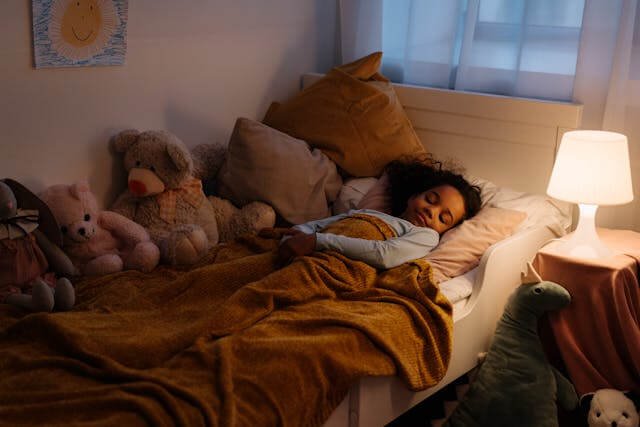
If you’re the parent of an autistic child, you’ve likely experienced the frustration of bedtime battles. The clock ticks past 10 p.m., then 11 p.m., and your child is still wide awake while you’re running on fumes. Perhaps your child falls asleep eventually but wakes several times during the night, or maybe they’re up for the day at 4:00 a.m. ready to go.
Sleep struggles affect up to 80% of autistic children, compared to about 25% of neurotypical children. This isn’t just exhausting for your child, it affects the entire family’s well-being, mental health, and ability to function during the day.
The good news is that while sleep challenges are common, sometimes surprisingly small environmental changes can make a meaningful difference. By understanding why sleep is often difficult for autistic children, parents can make targeted adjustments that create a calmer, more restful bedtime experience.
Why Sleep Is Often Difficult for Autistic Children

Sleep difficulties in autistic children aren’t simply behavioral issues or attempts to stay up later. They’re often rooted in neurological and physiological differences that affect how the body and brain prepare for rest. Understanding these underlying causes helps parents move from frustration to problem-solving mode.
Sensory Sensitivities
For many autistic children, the world doesn’t fade away at bedtime, it becomes louder, brighter, and more intense. Sensory processing differences mean that sensations most people filter out automatically can feel overwhelming.
Fabric textures that seem soft to you might feel like sandpaper against your child’s skin. Tags, seams, or certain fabric weaves can create constant low-level irritation that makes settling down impossible.
Light sensitivity means that streetlight seeping through curtains or the standby light on a television can be glaringly bright to a child whose visual system is highly sensitive. Even small light sources can suppress melatonin production and signal the brain to stay awake.
Sound sensitivity turns ordinary nighttime noises into sleep disruptors. The furnace kicking on, distant traffic, or family members moving around the house might sound magnified to your child, jerking them back toward wakefulness just as they’re drifting off.
Temperature discomfort is another often-overlooked factor. Some autistic children have difficulty regulating body temperature or may be hypersensitive to feeling too warm or too cool. Night sweats or chills can repeatedly interrupt sleep cycles.
Difficulty Regulating the Nervous System

Think of the nervous system like a dimmer switch that gradually lowers the lights as bedtime approaches. For many autistic children, that dimmer switch is stuck on high.
After a day filled with sensory input, social demands, and cognitive challenges, their nervous system remains in a state of high alert. The “fight or flight” response stays activated, making it physiologically difficult to power down. Even when your child looks calm on the outside, their internal stress response may still be running at full capacity.
This heightened state of arousal means that quiet activities don’t automatically trigger calmness. Their body simply doesn’t shift gears the same way neurotypical bodies do.
Differences in Melatonin Production
Research suggests that many autistic individuals produce melatonin differently than neurotypical people. Melatonin is the hormone that signals to our bodies that it’s time to sleep, and its production typically rises in the evening darkness.
Some studies indicate that autistic children may have irregular melatonin patterns either producing it at the wrong times or in inconsistent amounts. This biological difference can explain why your child seems genuinely not tired at typical bedtime hours. Their body clock is sending different signals than yours.
This irregular production often leads to delayed sleep onset, meaning your child may not feel sleepy until hours after you’ve tucked them in.
Anxiety and Overactive Thinking

The world can feel unpredictable and overwhelming for autistic children. A school day filled with social navigation, sensory input, and demands to process information quickly leaves a backlog of experiences to sort through.
When the quiet of bedtime arrives, that’s often when the thinking starts. Without daytime distractions, worries surface. Social interactions replay. Sensory memories resurface. Tomorrow’s uncertainties loom.
This overactive thinking isn’t a choice or an attempt to avoid sleep, it’s a natural response to a brain that processes information differently and deeply. The quiet that should invite sleep instead invites rumination.
Signs Your Child May Be Experiencing Sleep Difficulties
How do you know if your child’s sleep patterns are cause for concern versus just a phase? While every child has occasional restless nights, consistent patterns may indicate deeper autism sleep problems worth addressing.
Watch for these common signs:
- Taking more than 45 minutes to fall asleep on a regular basis, even when you’ve followed a consistent routine
- Frequent night waking where your child fully awakens and struggles to return to sleep without assistance
- Early morning waking before 5:00 a.m. with an inability to go back to sleep
- Restless sleep that includes constant movement, thrashing, or seeming to never reach deep, restorative sleep
- Difficulty calming before bedtime even with familiar routines and comforting activities
- Daytime irritability or behavioral changes that suggest your child isn’t getting enough quality rest
If you’re noticing several of these signs consistently, your child likely falls into the category of those experiencing significant autistic child sleep issues that deserve attention and support.
Small Changes That Can Improve Sleep

The encouraging news is that while why autistic children struggle with sleep involves complex factors, many families find relief through targeted environmental adjustments. These changes work with your child’s neurology rather than against it.
Create a Predictable Bedtime Routine
Predictability is calming for autistic children. When the brain knows what to expect, it doesn’t have to stay alert watching for surprises.
Consider a sequence like:
- A warm bath (the drop in body temperature afterward naturally promotes sleepiness)
- Putting on pajamas in dim lighting
- Reading a quiet story with minimal vocal variation
- Dimming lights throughout the house as bedtime approaches
- Following the same sequence every single night
The key is consistency. The same activities in the same order at the same time help the brain recognize, “Oh, this is what happens before sleep.” Over weeks and months, this routine becomes a powerful signal that helps prepare the nervous system for rest.
Reduce Sensory Overload Before Bed
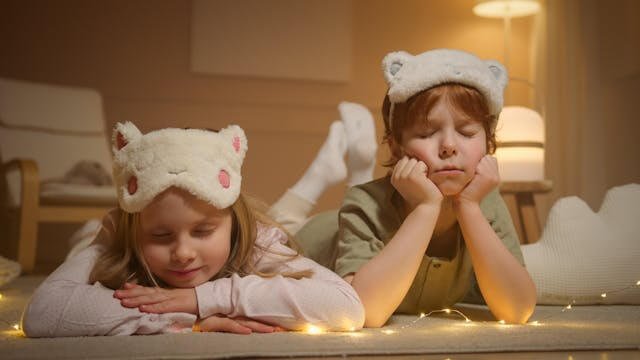
The hour or two before bedtime should be a gradual ramp-down, not an abrupt stop. Consider what sensory experiences your child is having during this window.
Start by turning off bright overhead lights and using lamps or dimmer switches instead. The human brain associates bright light with daytime alertness, so reducing light exposure helps trigger natural sleepiness.
Limit screen time, including tablets, television, and phones for at least one to two hours before bed. The blue light these devices emit directly suppresses melatonin production. Beyond the light, many screen activities are cognitively stimulating and keep the brain engaged rather than settling.
Replace screen time with genuinely quiet activities. Reading physical books, drawing, playing with calm sensory materials like putty or kinetic sand, or simply sitting together in dim light talking quietly can all help the nervous system power down.
Make the Bedroom a Calm Sensory Space

Your child’s bedroom should feel like a sanctuary from sensory overload, not another source of stimulation.
Blackout curtains are often game-changers for light-sensitive children. By eliminating streetlights, early dawn light, and passing car headlights, these curtains create a consistently dark environment that supports uninterrupted sleep.
White noise machines or fans provide steady, predictable sound that masks sudden noises from elsewhere in the house or neighborhood. For sound-sensitive children, this consistent auditory backdrop feels safer than unpredictable silence punctuated by startling sounds.
Minimal clutter reduces visual stimulation. A tidy, organized space with limited visual distractions helps signal that this room is for resting, not for processing lots of information.
Cool room temperature generally supports better sleep than warm environments. Most children sleep best in rooms around 65-68 degrees Fahrenheit. Experiment to find what temperature works for your specific child.
Choose Soft, Sensory-Friendly Bedding

The fabrics that touch your child’s skin for eight or more hours matter tremendously. Rough sheets, scratchy blankets, or stiff pillowcases can create ongoing sensory irritation that prevents deep sleep or causes frequent waking.
Traditional cotton bedding varies widely in quality and texture. Some cotton blends feel rough or develop pills that create uncomfortable bumps. For sensory-sensitive children, these minor irritations aren’t minor at all, they’re constant distractions that keep the brain alert.
Some parents experiment with smoother bedding materials that reduce friction and irritation. Mulberry silk pillowcases or sheets, for example, glide against the skin rather than dragging across it. They feel naturally cool to the touch, which benefits children who overheat at night, and contain no harsh chemicals or rough fibers.
Explore Promeed’s Mulberry silk bedding collection to discover sensory-friendly options designed for sensitive sleepers. Many parents report that switching to smoother, gentler fabrics helps reduce nighttime restlessness and morning irritability in their autistic children.
Be Patient: Sleep Improvements Take Time

If you implement several changes this week and expect perfect sleep by next week, you’ll likely feel disappointed. Sleep patterns develop over years, and they shift slowly.
Your child’s nervous system has learned certain patterns around sleep, and unlearning those patterns takes time. A new bedtime routine might feel confusing at first. Different bedding might take getting used to. The key is consistency over weeks and months, not perfection on any given night.
Remember that every autistic child is different. What works wonders for one family may not help another. Pay attention to your child’s unique responses. Keep a simple sleep log noting what you tried and how your child responded. Look for patterns over time rather than judging individual nights.
Your role is to create conditions that support sleep, not to force sleep itself. That shift in perspective from making your child sleep to inviting your child into rest, can reduce pressure on both of you.
When to Seek Professional Support

While environmental changes help many families, some autism sleep solutions require professional guidance. If you’ve tried consistent routines and sensory adjustments for several weeks without improvement, consider reaching out for additional support.
Your pediatrician should know about significant sleep difficulties. They can rule out medical causes of poor sleep, such as sleep apnea, reflux, or seizures, which sometimes underlie sleep problems in autistic children.
Sleep specialists with experience in pediatric or neurodivergent sleep can offer more targeted interventions, including sleep studies if necessary.
Occupational therapists trained in sensory integration can provide personalized strategies for helping your child’s nervous system regulate before bedtime. They might recommend specific sensory activities or therapeutic approaches tailored to your child’s unique profile.
Behavioral psychologists who understand autism can help address any learned associations or anxieties around bedtime that may have developed over years of sleep struggles.
There’s no shame in seeking help. Sleep is a biological necessity, and when environmental changes aren’t enough, professional support can make all the difference for your child and your entire family.
A Final Word for Tired Parents

Sleep struggles can feel exhausting for families, often leaving parents feeling helpless as they watch their child battle restlessness night after night. The exhaustion compounds, affecting patience during the day, marital relationships, and the ability to show up fully for work or other children.
But here’s the hopeful truth: small environmental changes can sometimes make a surprising difference. By understanding the sensory sensitivities, nervous system differences, and biological factors that make sleep difficult for many autistic children, parents can move from frustration to targeted action.
Creating a calm bedtime routine, reducing sensory overload, designing a peaceful sleep space, and choosing sensory-friendly bedding all work with your child’s neurology rather than against it. These changes honor how your child experiences the world while gently inviting rest.
Sleep may never look exactly like it does for neurotypical children, and that’s okay. The goal isn’t perfection, it’s more rest. More rest for your child means a brain better equipped to handle tomorrow’s challenges. More rest for you means greater patience and presence for the beautiful, complex journey of raising your autistic child.
Start with one small change tonight. Observe. Adjust. And trust that consistency, compassion, and understanding will gradually lead your family toward calmer, more restful nights.
Some links in this post are affiliate links. Learn more on our Affiliate Disclosure page.